
A Coruña, Spain
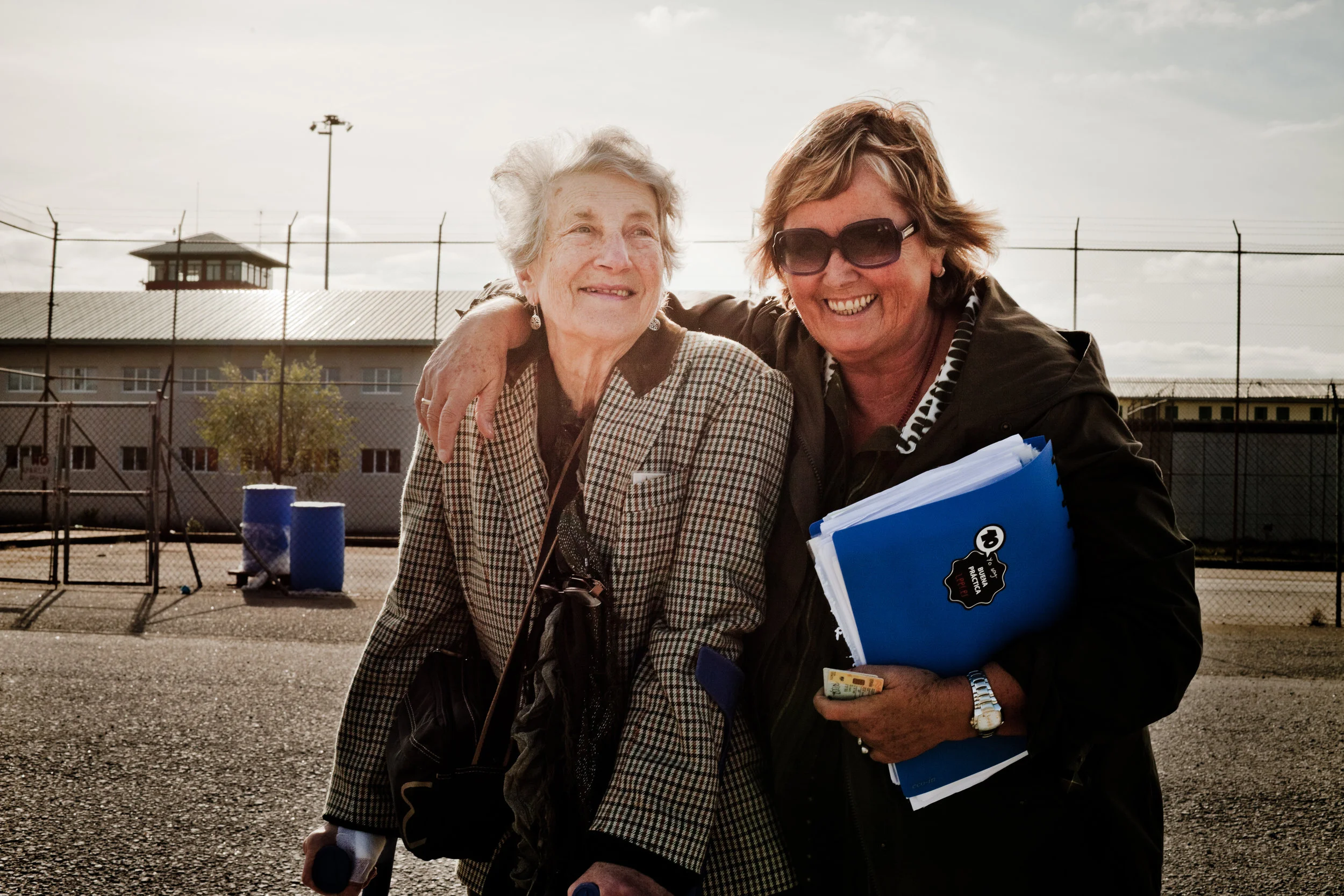
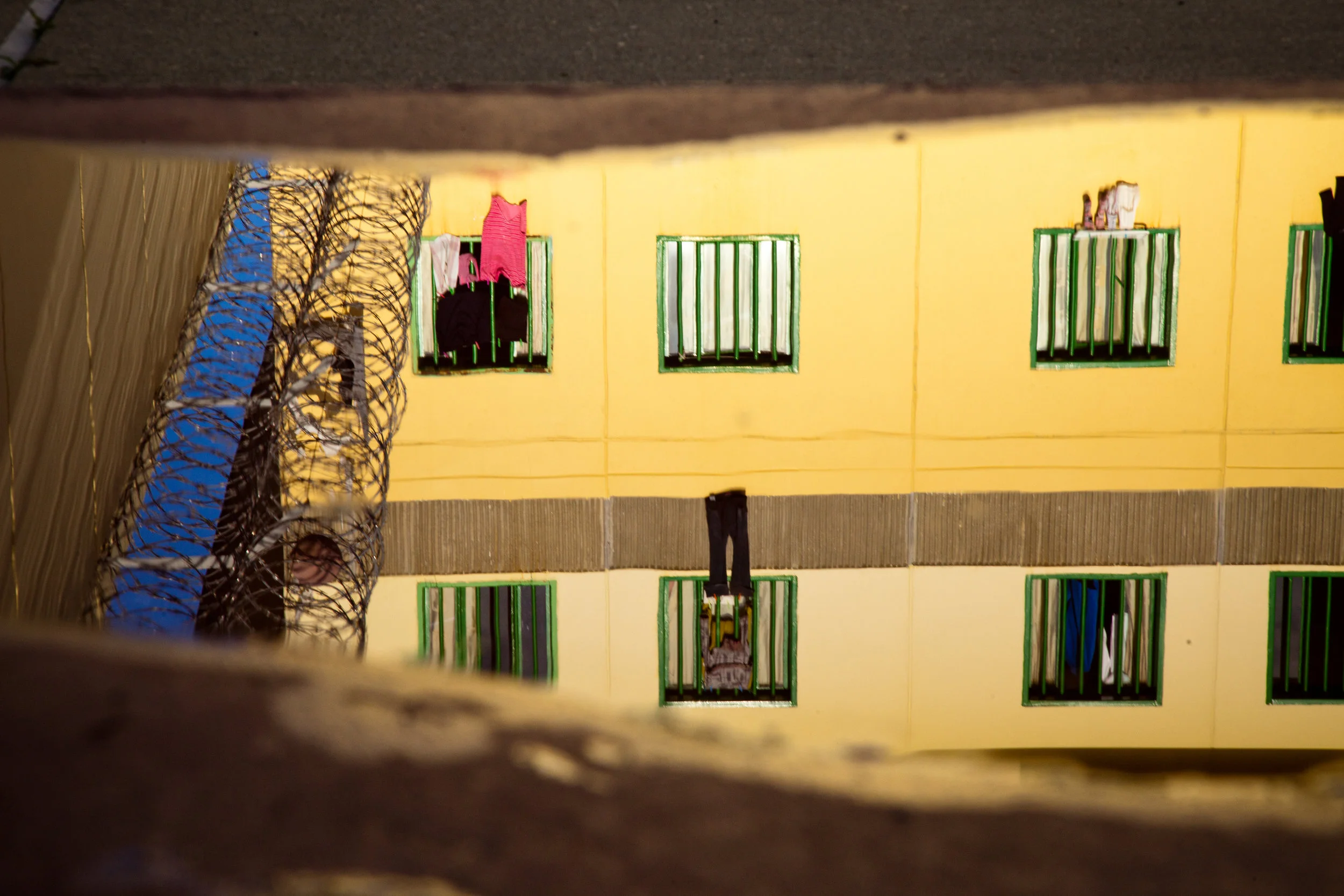
With so much talk about prisons these days—and particularly about Teixeiro, where Asunta's parents were sent and from which the convicted ETA member Inés del Río was released—I cannot help remembering Pilar Mingote and Paca Pardo. Almost two years ago I spent a couple of days taking photographs inside this Galician prison to document one of the stories in the book Héroes Sociales 2.0.
A few hours in women's wing 10 were enough to make me realise that I truly had no idea what the inside of a prison was like. Nor did I really understand the role prisons play in our society. It does not matter how many films you have seen or books you have read about them. Prison is probably one of the hardest places on earth to imagine without experiencing it.
Just before entering the wing, above the door, stood Article 25 of the Spanish Constitution, explaining what prisons are supposed to achieve:
“Custodial sentences and security measures shall be aimed at re-education and social rehabilitation and may not involve forced labour. In all cases, prisoners shall be entitled to paid work and the corresponding Social Security benefits, as well as access to culture and the full development of their personality.”
“Rehabilitation”: that idea, that faith in humanity.
The truth, however, is that our prisons are filled above all with poor people. With victims. With people who will not need to be reintegrated when they leave, but integrated into society for the first time. Innocent people born into broken families, without resources, in marginalised surroundings. Places where education reaches them neither at school in the morning nor at home in the afternoon; where the hope of making progress disappears before sunrise. Drugs are usually the first domino to fall. The remaining offences follow one after another. Paradoxically, entering prison may save them before the final piece falls.
Then there are those we call mad: people who commit appalling crimes that horrify us all—rape, abuse, macabre murders. The people the media labels “the monsters of...” The misunderstood, the betrayed, the powerless, those born with a misplaced gene; what do I know.
The group that always receives the most media attention is that of the “intellectual villains”: people who lived well, or better than most, and ended up behind bars; people who conspired against the status quo. This is where we tend to place terrorists and the corrupt. I have never met an ETA member, but judging by what Fernando Reinares—who appears to know the subject—writes in Patriotas de la muerte and says in this RNE interview, I would describe most terrorists as having a rather modest intellectual profile. Those with sharper minds know how to avoid getting their hands dirty.
Finally come the smallest group, those who arouse the least sympathy outside: people who live in glass bubbles, in worlds where your worth is measured only by your money and the favours you can provide. Financial criminals, the Bárcenas, Mario Condes and Rocas.
These people seem far too different as patients to receive the same diagnosis and the same treatment with variations only in dosage: “terrible people, send them to prison.” We can probably agree that restricting their freedom is appropriate when they may pose a threat on the street. But is the entire debate really going to be about how many years in prison they deserve? Is prison a form of collective revenge? Are years behind bars a currency? And above all, why do we allow all those prisoners in the first group to rot?
Those were the questions I carried out of Teixeiro on that autumn afternoon. Pilar Mingote and Paca Pardo have spent years visiting the prison regularly and genuinely helping the women of wing 10 find another chance. The two teachers do everything possible to help the inmates express themselves and learn how to do so. Together they have created an association, a magazine, reading workshops, radio and television programmes, conferences and interviews. They have done all of it through sheer will and with the little help they receive from people nearby who learn about their projects. Pilar Portero tells the story much better than I do in the book.