

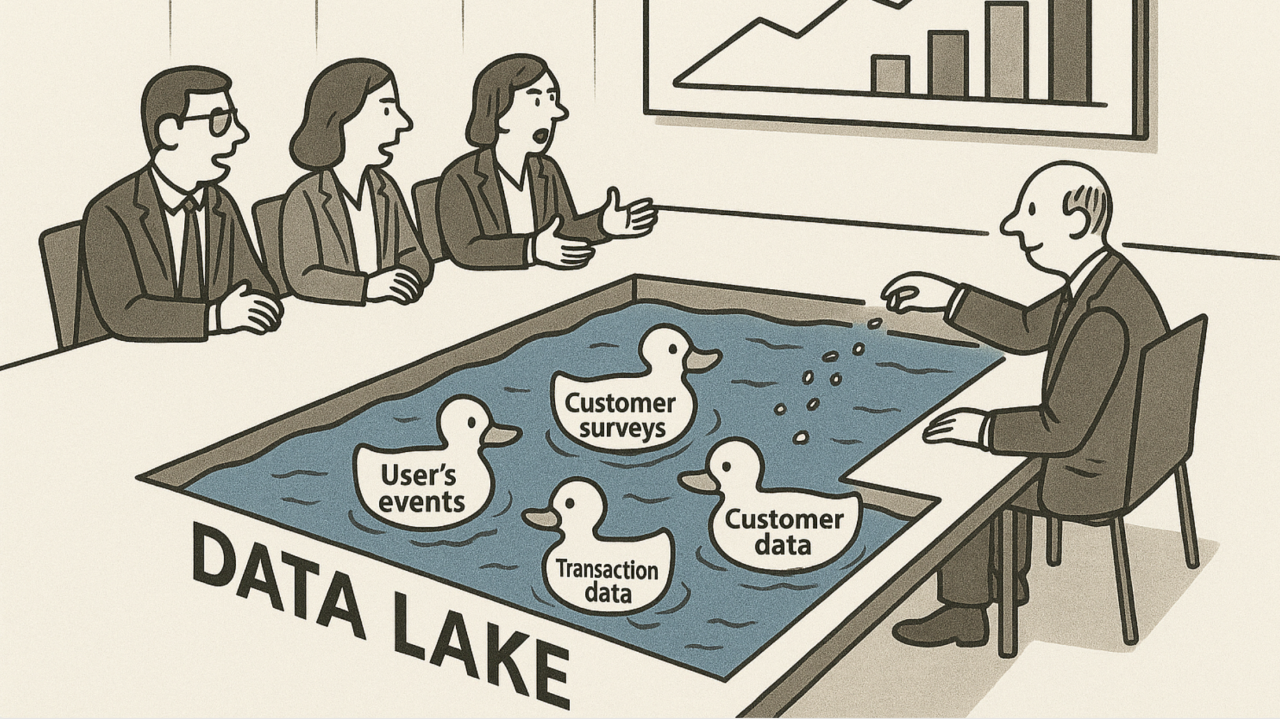
At the decision making table, the data is just something nice that executives feel they need to have but clearly don't know how to use
After nearly 10 years working in data analytics, and after spending many millions building and selling Graphext , I’m still amazed at how hard it is for companies to make even one decision that truly relies on data. That frustration is what pushed me to write this post.
1. Collecting data is now easy, asking the right questions is not
Even with a spotless data lake and shiny BI dashboards, little changes when the questions are vague or detached from business reality. To ask good questions you need both
- Deep business context – knowing which metrics truly move the needle, and
- Solid analytics skills – translating doubts into testable hypotheses.
A SaaS B2B example:
Few people master both business and analytics, without them, “analysis” collapses into polished and not actionable reporting and often creates more confusion than clarity.
2. Hybrid talent is scarce and rotates fast
Those rare profiles who mix business intuition and data science usually leave soon:
- Demand is enormous, they jump for better challenges or salaries.
- Short tenures mean they never absorb the company’s history and politics.
- Most of these people end up becoming entrepreneurs, CEOs, or partners at elite consulting firms like McKinsey or Bain.
3. Narrow vision because of functional silos
Over-specialization drives Marketing, Sales, Product, and HR to focus only on their own KPIs. No one connects the dots:
- Teams optimize locally, sometimes hurting overall results.
- Strategic questions “Which combo of levers accelerates growth?” have no clear owner.
4. Data quality and integration: the perpetual headache
Despite millions in ETLs and warehouses, daily reality shows:
- Capture flows keep changing (new apps, tracking tweaks) breaking historical series.
- Many systems (CRM, ERP, spreadsheets) that cannot be joined with one SQL query.
- Bad definitions and duplicates that spawn conflicting metrics and kill trust.
5. Key variables not recorded at all
Some events, like why a customer finally churns, hinge on subjective factors: expectations, politics, personal perception.
- Product events or quick surveys capture only the surface.
- Without solid methods to collect those nuances (deep interviews, structured qualitative feedback), every predictive model is incomplete.
Conclusion
The gap between “we have data” and “we act on data” cannot be closed by buying more tech. It demands hybrid talent, broken silos, constant data hygiene and, above all, powerful questions that tie analytics to strategy. Without these basics, companies will keep producing fancy dashboards… and deciding by gut.
Next time, we'll review each point and discuss how the new generative AI could impact each of them.
You should read Benn Stancil's latest article on this topic. Actually, almost all of his articles end up talking about this deep frustration that all of us who have tried to solve this problem carry inside. We equally love and hate analytics, probably because we experience it too intensely.