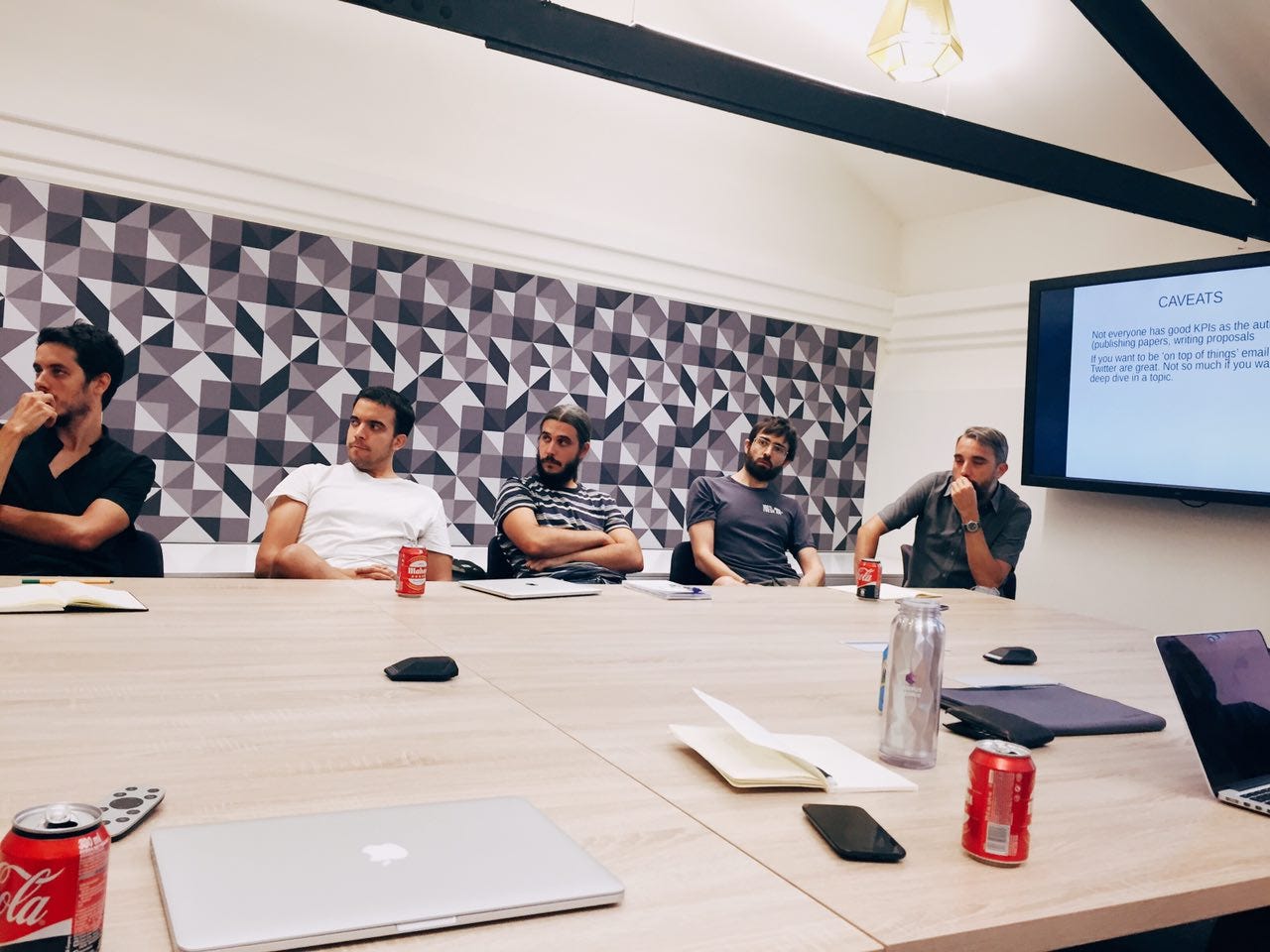

This Wednesday in August we had a Book Club again at Graphext, in Campus Madrid. Until now our scientific consigliere, Manuel Cebrián, has been the promoter and master of ceremonies. Thank you Kiko, Nacho, Roberto, Javier and Alejandro for joining us and participating.
On this occasion we invited Daniel Lobato to talk to us about Deep Work: Rules for Focused Success in a Distracted World by Cal Newport
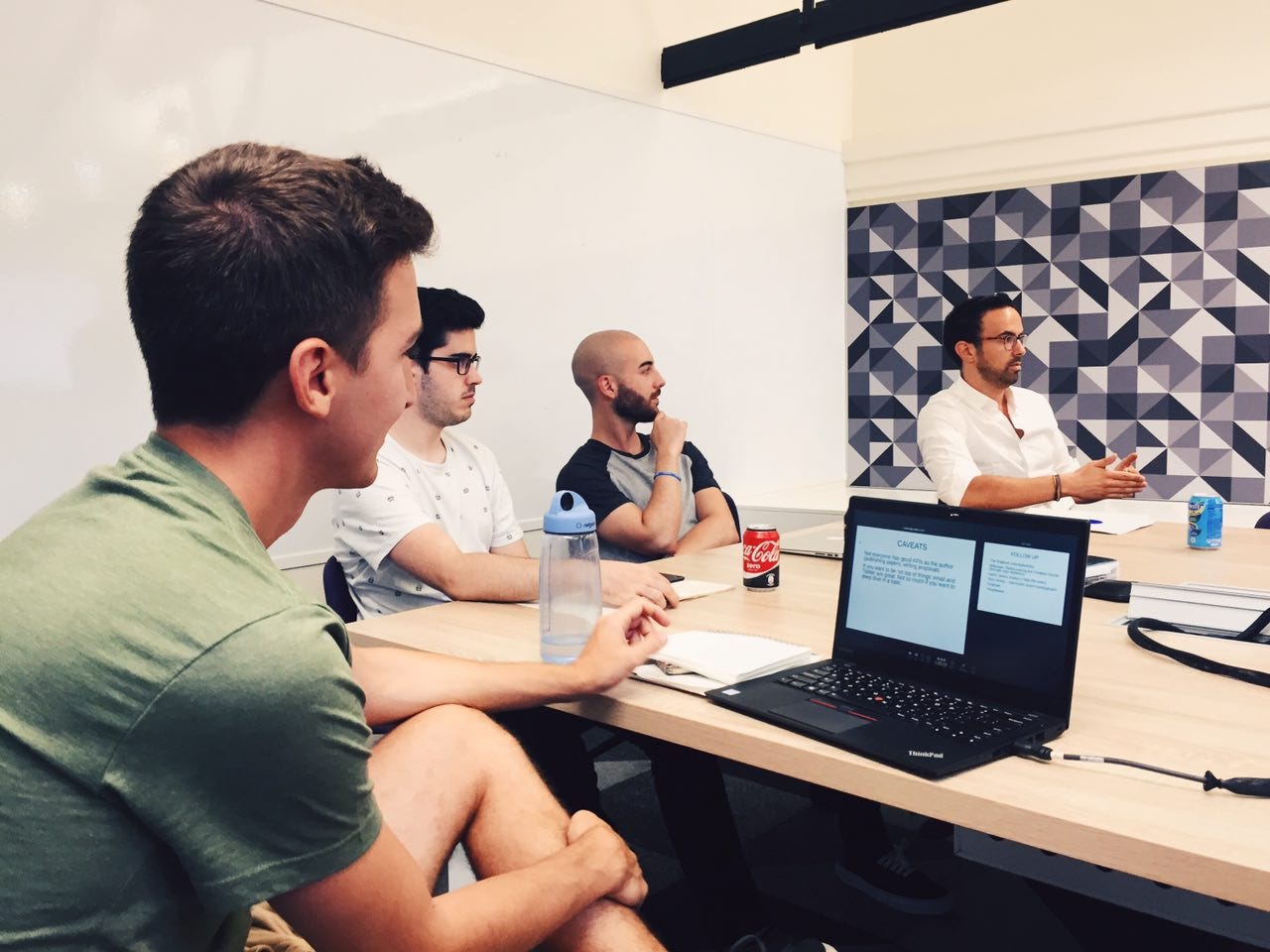
Here are some notes from Manuel and me about the main points of discussion and criticisms of this book that tries to convince us to leave all social networks and mundane distractions to be able to work with depth and make a difference:
0 . Ego Depletion: In a state of mental exhaustion, the capacity for self-control is damaged. This explains why at the end of the day we end up eating junk and procrastinating a lot.
1 . DeepWork talks about how to optimize a task, not about which task to choose to optimize. That remains an open question, possibly outside the limits of science (a non-computable problem).
How do we expose ourselves to new ideas without getting too distracted? How to have focus and not be short-sighted at the same time? Breadth vs Depth first search
2 . DeepWork is very difficult for CEOs or any job that does not have clear KPIs (performance indicators) (e.g. being a Father or Boyfriend). Putting KPIs on these tasks could be considered strange or even sociopathic behavior.
There was a moment of CEO therapy about how difficult and terrible it can be to have such diffuse and uncertain responsibilities that make it difficult for us to measure how well we are doing.
3 . Internet “spoils” your life, it takes away the emotion of discovering unknown things in a world where everything can be known through web browsing. Corollary: People travel more, but enjoy it less.
Books made us dream, imagine. Then you traveled and reality finished closing. Cinema and TV started to gut reality for us but still left room for imagination. Being able to search Google for the spoiler and see the detail of what it is like to live in Japan being Spanish ends up destroying the experience of living it for yourself.
4 . Ordering life too much can, paradoxically, reduce the pleasure of life, although at the same time anxiety is reduced. There may be a relationship between anxiety and enjoyment of discovering.
5 . The feeling of control calms us. For some, programming is just a way to exercise control, no different from what procrastinating is for others: browsing Marca or Instagram for hours.
6 . DeepWork is in a way, a form of selfishness, which implies ignoring others for long periods of time.
One of the biggest purposes of DeepWork is to pass into immortality avoiding any distraction that does not lead you to that purpose, even ignoring your wife or children, who become tasks on a To-do List.
7 . Most people in the technology world think they could do “more” without knowing very well what that “more” is.
8 . DeepWork can be opposed to innate passion.
9 . Most DeepWork recipes come from popular culture, which tells us that efficiency is something that historically has roots in the past.
Why are we so obsessed with economic growth, efficiency and progress? Is it capitalism that pushes us or is it innate in human nature?